How the Kobo Clara Colour Got Me Reading Again
The Kobo Clara Colour's font flexibility — especially OpenDyslexic — removed the friction that kept me from reading. Here's what changed.
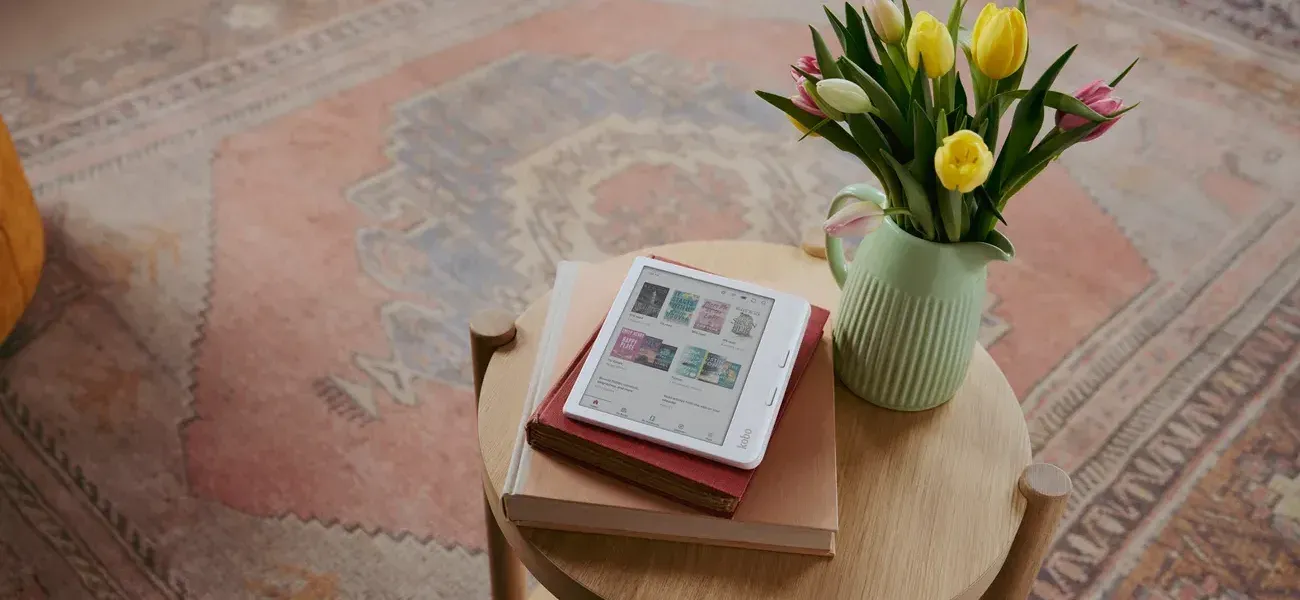
I used to say I was not a reader. Turns out I just had not found the right setup.
The Kobo Clara Colour changed that. Not because of the color screen, though it is a nice touch for book covers and comics. What actually moved the needle was something I did not expect to care about: font options.
The problem with reading
Reading a physical book always wore me out faster than I thought it should. I would start a chapter and find my attention sliding off the page. I assumed it was me — short attention span, not a book person.
What I did not know was that part of the friction was the font itself. Standard typefaces are designed for sighted readers without processing differences. If your brain works differently — if letters tend to rotate or swap on you — those same fonts quietly make reading harder every single line.
OpenDyslexic changes the equation
The Kobo Clara Colour ships with OpenDyslexic as a built-in font option. OpenDyslexic was designed specifically to reduce the visual confusion that can come with dyslexia. Each letter has a heavier bottom, making it harder for the brain to flip or rotate it. The shapes are more distinct from one another.
Switching to it on the Kobo was immediate. The text just sat there on the page, stable, not asking anything of me before I could read it. That sounds small. It is not small.
Font flexibility beyond one choice
What makes the Kobo’s font system genuinely useful is that it goes further than a single accessible option. You can adjust:
- Font family — OpenDyslexic, Georgia, Gill Sans, Kobo Nickel, and more
- Font weight — thin to bold, independently of the typeface
- Font size — wide range, adjustable on the fly
- Line spacing and margins — control the density of text on the page
This matters because accessibility needs are not uniform. What helps one person read better may not help another. Having real control over the reading environment means you can tune it to your specific situation rather than accepting defaults.
I keep OpenDyslexic as my default, bump up the font size a notch above what I would have picked a year ago, and widen the line spacing slightly. That combination works for me. It took maybe five minutes to find it.
What has actually changed
I have read more in the months since getting the Clara Colour than in the several years before it combined. That is not an exaggeration. I have finished books I had been “meaning to read” for years. I pick up the Kobo most evenings now the way I used to mindlessly pick up my phone.
The device is compact — roughly the size of a paperback — and light enough to hold one-handed. The e-ink screen means no blue light fighting my sleep the way a phone screen would. The battery lasts weeks. None of those things are the reason I use it, but they all make it easier to keep using it.
A physical book does not give you any of this. The font is fixed, the size is fixed, the contrast is whatever the publisher chose. For most people that is fine. For me, those fixed constraints were quietly making reading harder than it needed to be. The Kobo removes them entirely — same words, same stories, but on your terms.
If you are comparing this to a Kindle, the reading experience is similar in feel, but the Kindle ties you more tightly to Amazon — your books live in their ecosystem and moving them elsewhere is not straightforward. Kobo supports open ebook formats, so your library is more portable and less dependent on a single storefront.
The reason I use it is that reading does not feel like work anymore.
Worth considering if you have struggled with reading
If you have written yourself off as a non-reader, or found that you start books but never finish them, I would not assume the problem is you before you have tried adjusting the reading environment. Font choice specifically is underrated. Most reading apps on phones and tablets treat font as a cosmetic preference. The Kobo treats it as something that affects whether reading actually works.
The Clara Colour is available directly at kobo.com. It is not the most expensive e-reader on the market, and the font flexibility alone is worth the price of entry if you are someone who has ever found reading harder than it should be.
For feedback, ping me on Mastodon@tuck@fosstodon.org.